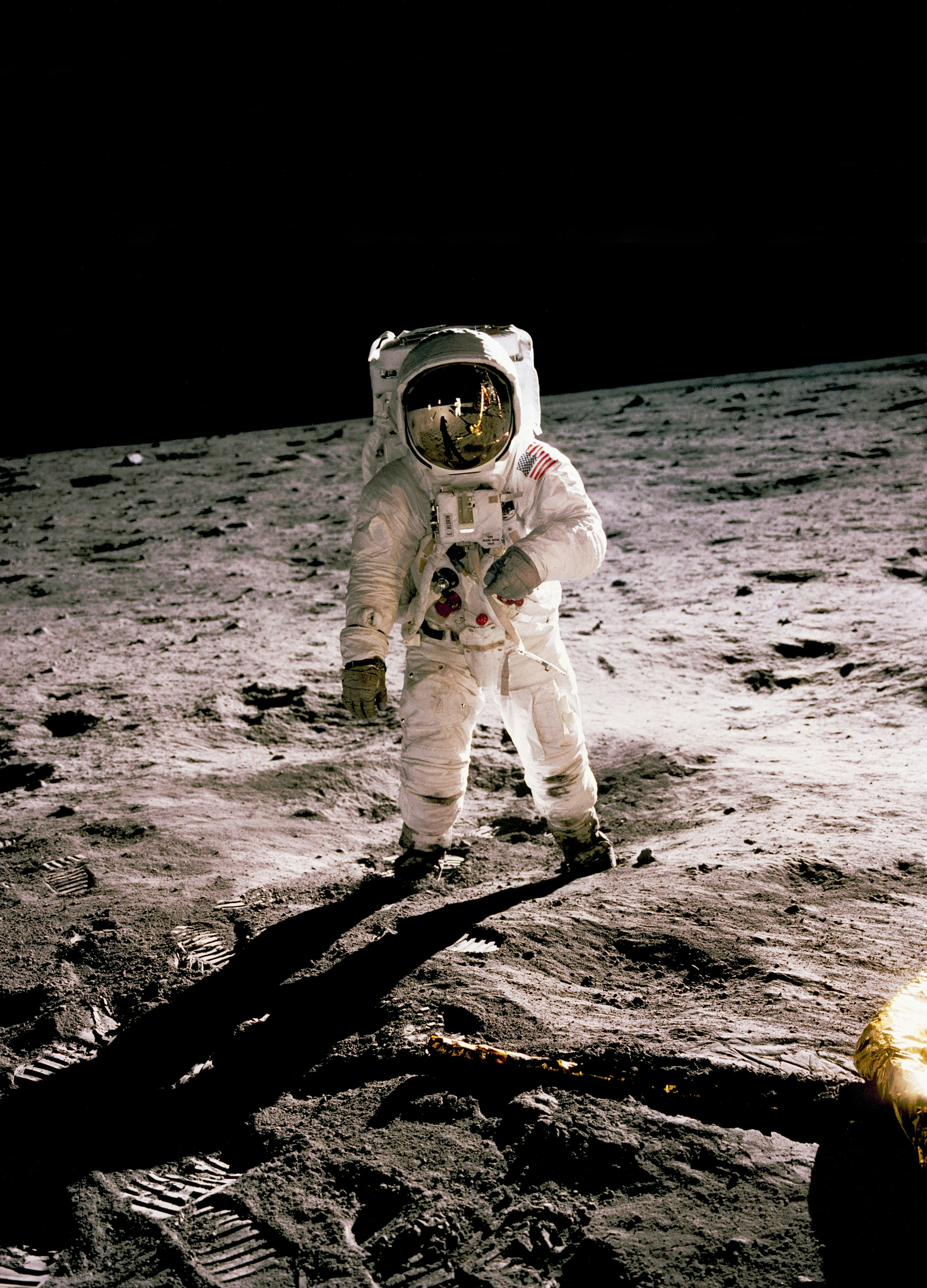
The 1967 Outer Space Treaty declared the cosmos the "province of all mankind." Today, as corporations launch mega-constellations and nations race for lunar resources, the ethical framework of space exploration is fracturing. We face a profound question: Without updated laws, will we export our conflict and pollution to the stars?
By THE EDITORIAL DESK
WASHINGTON — When the United Nations drafted the Outer Space Treaty (OST) in 1967, space was the domain of two superpowers, the United States and the Soviet Union. The primary fear was nuclear weapons in orbit. Today, the landscape has transformed beyond recognition.
According to data from the Union of Concerned Scientists, there are now over 9,000 active satellites in orbit—a number that has more than tripled in just five years. Private entities like SpaceX, Amazon, and aggressive national programs in China and India have democratized access to the heavens.
Yet, this rapid expansion has outpaced governance. The legal architecture of space is a Cold War relic, ill-equipped to handle 21st-century challenges like asteroid mining, orbital debris, and the potential colonization of Mars.
This report analyzes the five critical ethical crises facing the global community today: the degradation of Earth’s orbital environment, the legal battle over lunar resources, the protection of alien ecosystems, the militarization of space, and the human rights of future explorers.
I. THE TRAGEDY OF THE ORBITAL COMMONS
Sustainability and the Risk of the Kessler Syndrome
The most immediate ethical crisis is occurring 300 to 1,200 miles above our heads. Low Earth Orbit (LEO) is a finite natural resource, and it is becoming dangerously crowded.
The Reality of Debris The European Space Agency (ESA) estimates there are currently over 130 million pieces of debris smaller than one centimeter in orbit, alongside 36,500 pieces larger than ten centimeters. At orbital velocities of 17,500 mph (28,000 km/h), even a paint fleck carries the kinetic energy of a bullet.
This situation edges humanity toward the "Kessler Syndrome," a theoretical scenario proposed by NASA scientist Donald Kessler in 1978. He warned that once the density of objects in LEO reaches a critical threshold, a single collision could generate a cascade of debris, triggering further collisions until certain orbits become unusable for generations.
Light Pollution and Cultural Heritage The deployment of "mega-constellations"—vast networks of internet satellites like Starlink and Kuiper—has raised ethical concerns from the astronomical community. The International Astronomical Union (IAU) has issued formal statements warning that the brightness of these satellites is compromising ground-based astronomy.
This raises a cultural and ethical question: Who owns the night sky? Is the pristine view of the universe a human right? The IAU established a "Centre for the Protection of the Dark and Quiet Sky from Satellite Constellation Interference" to address this, arguing that the loss of the night sky affects Indigenous cultural heritage and humanity's connection to the cosmos.
II. THE LUNAR GOLD RUSH
Property Rights vs. Common Heritage
The Moon has transitioned from a destination of prestige to a strategic asset. The driving force is water ice, confirmed to exist in the permanently shadowed craters of the Lunar South Pole. This ice is critical for life support and can be split into hydrogen and oxygen to create rocket fuel.
The Legal Conflict Article II of the Outer Space Treaty (1967) states explicitly: "Outer space, including the moon and other celestial bodies, is not subject to national appropriation by claim of sovereignty, by means of use or occupation, or by any other means."
However, the treaty is silent on the extraction of resources by private companies.
- The U.S. Position: In 2015, the U.S. Congress passed the Commercial Space Launch Competitiveness Act, granting U.S. citizens the right to own and sell asteroid and space resources. The Artemis Accords, a set of non-binding principles led by NASA and signed by over 30 nations (including Japan, UK, Canada), reinforce this interpretation.
- The Opposition: Russia and China have criticized this approach. China is leading a parallel initiative, the International Lunar Research Station (ILRS). The fear among legal scholars is fragmentation—where rival blocs operate under different rules.
Frans von der Dunk, a professor of space law at the University of Nebraska-Lincoln, has frequently noted the tension between these interpretations. The risk is a "first-come, first-served" reality where technologically advanced nations monopolize the most valuable lunar sites, violating the spirit, if not the letter, of the "province of all mankind" clause.
III. PLANETARY PROTECTION
Bioethics and the Search for Life
As humanity targets Mars and the icy moons of Jupiter (Europa) and Saturn (Enceladus), we encounter the ethics of biology, formally known as Planetary Protection.
The Committee on Space Research (COSPAR) maintains an international policy to prevent two scenarios:
- Forward Contamination: Earth microbes contaminating other worlds, potentially killing indigenous life or ruining scientific detection.
- Backward Contamination: Returning samples bringing potential extraterrestrial pathogens to Earth.
The Mars Dilemma Current robotic missions, like NASA's Perseverance rover, adhere to strict sterilization standards. However, human missions present an ethical paradox. As noted by the National Academies of Sciences, Engineering, and Medicine, humans cannot be fully sterilized. We are walking ecosystems.
If humans land on Mars, we will inevitably introduce Earth bacteria. This forces an uncomfortable ethical decision: Does the scientific value of human exploration outweigh the risk of destroying a potential "second genesis" of life? Some astrobiologists argue that if life exists on Mars, we have a moral obligation to leave it undisturbed—a concept known as "Cosmic Preservationism."
IV. THE MILITARIZATION OF THE VACUUM
"Dual-Use" Technology and Strategic Stability
While the OST prohibits nuclear weapons in orbit, it does not ban conventional weapons or military satellites. Space has effectively become a warfighting domain.
The Rise of ASATs The destruction of satellites using ground-based missiles—Anti-Satellite (ASAT) tests—has created massive debris fields.
- China (2007): Destroyed a weather satellite, creating over 3,000 pieces of trackable debris.
- USA (2008), India (2019), Russia (2021): Conducted similar tests.
In 2022, the United States became the first nation to declare a self-imposed moratorium on destructive, direct-ascent ASAT missile testing, seeking to establish a new international norm.
The "Dual-Use" Ambiguity The real ethical challenge lies in "dual-use" technology. A satellite designed for "active debris removal" (grabbing a dead satellite to de-orbit it) uses the same technology required to grab and disable an enemy satellite. This ambiguity breeds mistrust. Without transparency measures, a peaceful cleanup mission could be interpreted as an act of aggression, potentially triggering conflict on Earth.
V. HUMAN RIGHTS IN THE VOID
Labor and Liberty Beyond Earth
Finally, as companies like SpaceX envision cities on Mars, legal scholars are asking: What laws govern a human colony?
The International Space Station (ISS) operates under an Intergovernmental Agreement (IGA) where astronauts remain under the jurisdiction of their home country. However, this model may not work for permanent settlements.
The Tyranny of Physics In a sealed environment where air, water, and heat are controlled by a central authority (the colony operator), the potential for coercion is absolute. The Antarctic Treaty System offers a partial model, prioritizing scientific cooperation and banning military bases, but it forbids permanent settlement and commercial exploitation—the exact goals of New Space.
Legal experts warn that without a specific "Constitution for Space Settlement," colonists could find themselves in a legal vacuum regarding labor rights and civil liberties. The isolation of Mars creates a scenario where terrestrial enforcement of human rights is physically impossible.
VI. CONCLUSION
We stand at a pivotal moment in history. The technologies to exploit space are maturing faster than the diplomacies to regulate them.
The optimistic view, championed by industry leaders, is that space resources will solve Earth’s scarcity problems and that multi-planetary life is the ultimate insurance policy for our species. The pessimistic view is that we are on the verge of exporting our worst habits—pollution, inequality, and war—into the solar system.
The "waiting thing" in space, to paraphrase the late astronomer Carl Sagan, is not just discovery; it is responsibility. The coming decade will determine whether the Final Frontier becomes a lawless "Wild West" or a shared "Global Commons."
FACT BOX: KEY LEGAL INSTRUMENTS
- Outer Space Treaty (1967): Ratified by 115 countries. Bans nukes in space; declares space free for exploration; makes states liable for their national space activities (public or private).
- Moon Agreement (1979): Declares the Moon the "common heritage of mankind." Failed to gain support from major space powers (US, Russia, China did not ratify).
- Artemis Accords (2020): A US-led non-binding multilateral arrangement based on the OST, promoting peaceful purposes, transparency, and interoperability. It has become the de-facto framework for the Western bloc.
- Liability Convention (1972): Establishes that a launching state is absolutely liable to pay compensation for damage caused by its space object on the surface of the Earth or to aircraft.
Based on official documents from the United Nations Office for Outer Space Affairs (UNOOSA), policies of NASA and ESA, and published legal analysis.