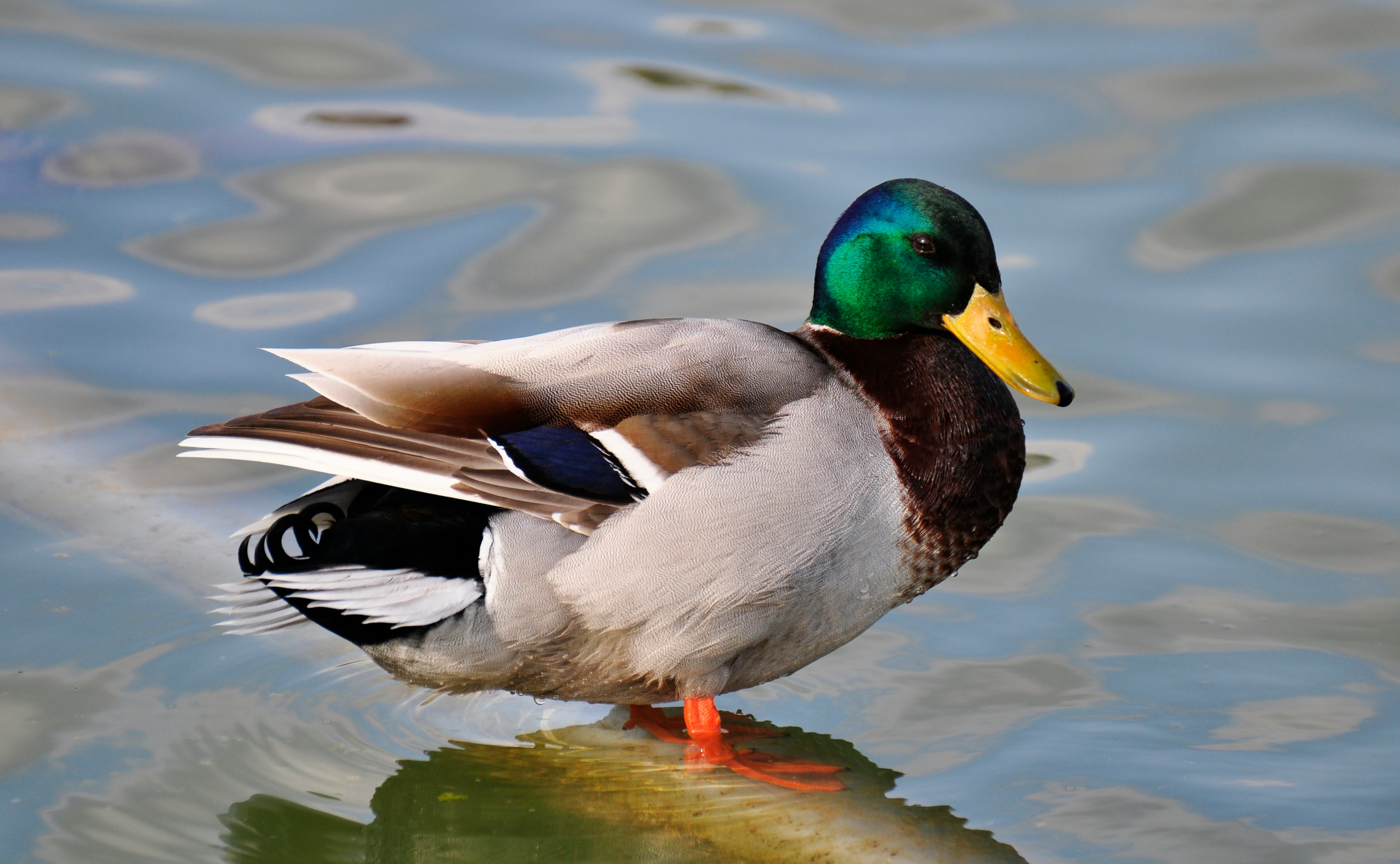
Nature’s Most Overlooked Engineering Marvels
Beyond the park pond, ducks possess abilities that defy imagination: from sleeping with half a brain to surviving arctic waters and waging an evolutionary war.
By THE SCIENCE DESK
To the casual observer, the duck is a simple creature. They paddle in city parks, quack for breadcrumbs, and serve as a symbol of tranquility. However, ornithologists and evolutionary biologists know a different truth: the Anatidae family (which includes ducks, geese, and swans) is one of nature’s most sophisticated survival machines.
Beneath their waterproof feathers lies a world of complex neuroscience, extreme physical resilience, and a reproductive history that has baffled scientists for decades.
I. The Sleeping Sentries: Half-Brain Slumber
Perhaps the most remarkable capability of the duck is its ability to sleep while staying awake. This phenomenon is known as Unihemispheric Slow-Wave Sleep (USWS).
Unlike humans, who must shut down their entire brain to rest, ducks can put one hemisphere of their brain to sleep while the other remains alert. This allows them to literally sleep with one eye open.
Research from Indiana State University has shown that this is a strategic group behavior. When ducks sleep in a row (a "raft"), the ducks in the center will close both eyes and sleep fully. However, the ducks on the outer edges will keep their outward-facing eye open. This "peeking eye" is controlled by the awake half of the brain, scanning for predators like foxes or falcons, while the other half rests. They rotate positions throughout the night to ensure everyone gets a full rest.
II. Built for the Freeze: The Physics of Cold Feet
Why don't a duck's feet freeze when standing on a frozen lake? The answer lies in a biological heat-exchange system that rivals modern engineering.
Ducks possess a circulatory adaptation called Counter-Current Heat Exchange. The arteries carrying warm blood from the heart into the legs are woven closely against the veins carrying cold blood back from the feet.
As the warm blood flows down, it transfers its heat to the cold venous blood returning up. By the time the blood reaches the webbed feet, it is cool enough (just above freezing) that it doesn't lose much heat to the ice, but warm enough to prevent tissue damage. Simultaneously, the blood returning to the body is pre-warmed, preventing the duck’s core temperature from dropping. This allows them to paddle in near-freezing water for hours without hypothermia.
III. The Waterproof Shield
A duck is never truly wet. Their buoyancy and dryness are the result of rigorous maintenance involving the uropygial gland (or preen gland), located at the base of their tail.
This gland secretes a complex waxy oil. When you see a duck turning its head backward and rubbing its beak over its feathers, it is not just cleaning; it is waterproofing. They spread this oil over their outer feathers, creating a hydrophobic seal.
Furthermore, the structure of the feathers themselves acts like Velcro, interlocking so tightly that water cannot penetrate to the downy layer beneath. This trapped air layer provides insulation so effective that a duck’s skin remains dry and warm even while submerged.
IV. An Evolutionary Arms Race
Perhaps the most surprising—and bizarre—aspect of duck biology is their reproductive anatomy, which scientists describe as an "evolutionary arms race."
In many duck species, particularly the Mallard (Anas platyrhynchos), males and females have evolved antagonistic anatomies due to intense sexual competition.
- The Male: The male duck has evolved a corkscrew-shaped phallus, which in some species can be as long as the bird's body.
- The Female: In response, the female has evolved a vaginal tract that spirals in the opposite direction, often with false pockets and dead ends.
Dr. Patricia Brennan of Mount Holyoke College, a leading researcher in this field, explains that this complexity allows the female to control fertilization. If she is not a willing partner, her anatomy physically prevents the male from successfully fertilizing eggs. It is a stunning example of "sexual conflict" driving rapid anatomical evolution.
V. Navigational Geniuses
While park ducks may seem sedentary, wild ducks are endurance athletes. During migration, species like the Northern Pintail fly thousands of miles at speeds up to 60 mph (97 km/h).
They navigate using a combination of celestial cues (the stars and sun) and the Earth's magnetic field. Recent studies suggest that visual landmarks—rivers, coastlines, and even highways—are passed down through generations, creating a "cultural map" within the flock.
Conclusion: Respect the Quack
The duck is a master of the water, the air, and the land. They are biological submarines with built-in heating systems, vigilant sleepers, and participants in one of the animal kingdom's most intense evolutionary battles.
The next time you walk past a pond, remember: that bird bobbing in the water is not just a park ornament. It is an evolutionary marvel.
SIDEBAR: Please, Don't Feed Them Bread
While feeding ducks is a popular pastime, environmentalists and veterinarians urge the public to stop using bread.
- Malnutrition: Bread is "junk food" for ducks—high in calories but lacking nutrients. It can lead to "Angel Wing," a permanent deformity where the wings grow outward, preventing the bird from flying.
- Pollution: Uneaten bread rots in the water, promoting algae blooms and attracting rats.
- Alternatives: If you must feed them, choose halved grapes, cracked corn, frozen peas (defrosted), or birdseed.
Based on ornithological research and biological studies of the family Anatidae.