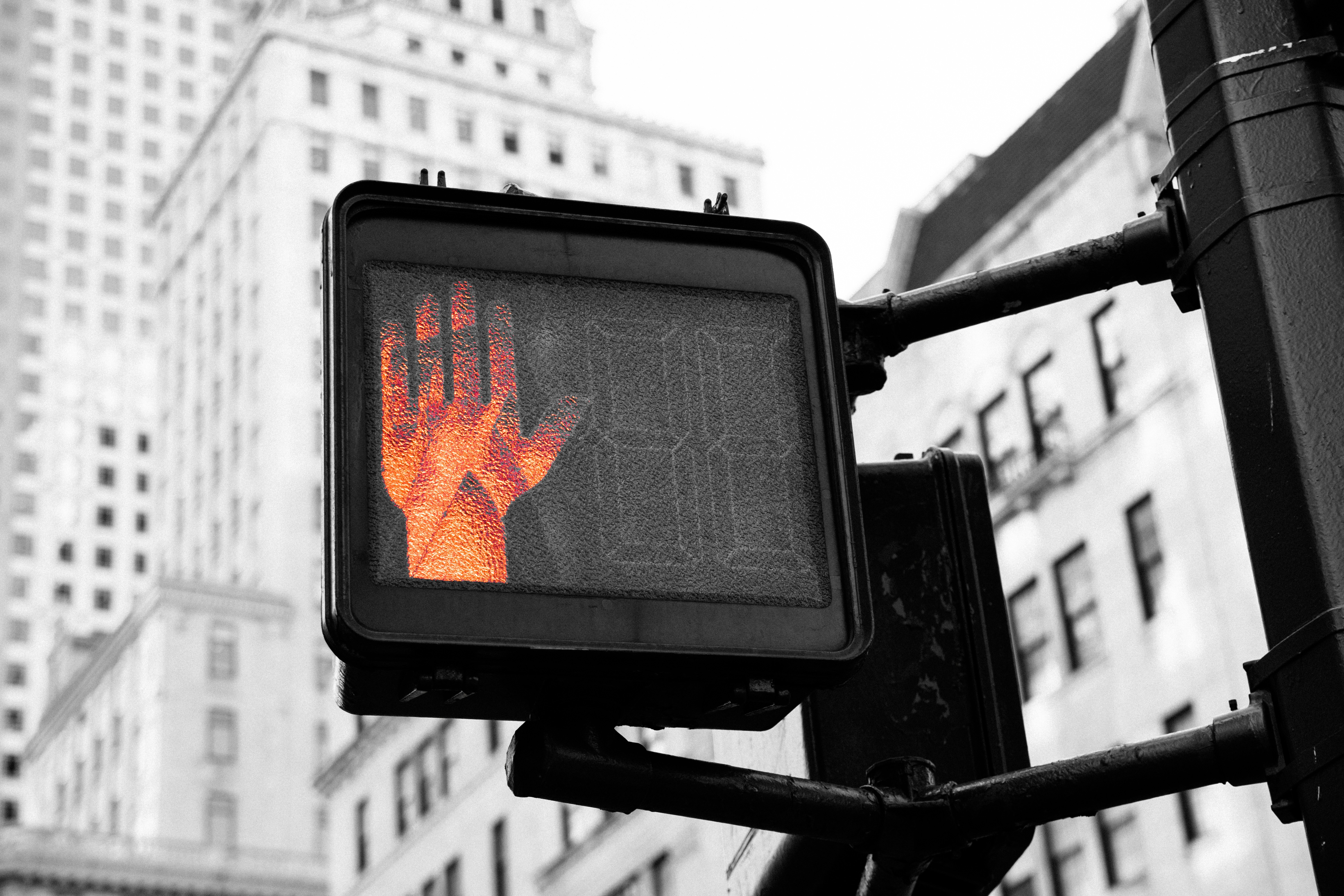
NEW YORK — It begins with a buzz, a ping, or a flash of light. You pick up your phone to check a single notification. Twenty minutes later, you are still scrolling, deep in a labyrinth of short-form videos, outraged tweets, and perfectly targeted advertisements. You have just paid a toll, not in dollars, but in the most finite resource you possess: your attention.
Welcome to the Attention Economy, a commercial landscape where human focus is the commodity, and our screens are the extraction sites.
In 1971, Nobel laureate Herbert Simon famously observed, "A wealth of information creates a poverty of attention." Fifty years later, that poverty has become a crisis. As tech giants, media outlets, and advertisers engage in a ruthless "arms race" for our eyeballs, society is grappling with the hidden costs of a business model built on distraction.
The Race to the Bottom of the Brain Stem
The mechanics of the attention economy are not accidental; they are engineered. Silicon Valley insiders have long admitted that many apps are designed using the principles of behavioral psychology and gambling addiction.
"The infinite scroll is the digital equivalent of a slot machine lever," explains Dr. Julian Rieser, a cognitive psychologist and former consultant for social media firms. "Every time you swipe down, you are playing a game of chance. Will the next post be funny? Will it be shocking? Will it be boring? That uncertainty releases dopamine. It keeps you pulling the lever."
This mechanism, known as "intermittent variable rewards," is why it is physically difficult to put a phone down. Platforms like TikTok, Instagram, and X (formerly Twitter) have optimized their interfaces to remove all "friction." There are no stopping points, no chapters, no end of the page. There is only the feed.
Enragement is Engagement
However, the attention economy does not just demand time; it demands intensity. Algorithms are programmed to prioritize content that generates the highest engagement. Statistically, the emotions that trigger the quickest reactions are not joy or nuance, but anger, fear, and outrage.
This has led to the phenomenon of "rage-baiting." News headlines are sharpened to provoke. Social media posts are designed to polarize. In the marketplace of attention, a nuanced essay on economic policy cannot compete with a thirty-second video screaming about a conspiracy.
"We have built an information ecosystem that favors impulses over reflection," argues Sarah O’Connell, author of The Fractured Mind. "The algorithm doesn't care if a statement is true. It doesn't care if it tears a society apart. It only cares that you stopped scrolling to look at it."
This dynamic has profound implications for democracy. When the primary business goal of the public square is to keep users glued to the screen, divisive rhetoric becomes a profitable asset. We are not just losing our focus; we are losing our shared reality.
The Death of Boredom and Deep Work
The cost of this constant stimulation is visible in our changing cognitive habits. The ability to engage in "Deep Work"—sustained, distraction-free concentration—is atrophying.
Educators report that students struggle to read entire books. Employers notice that younger workers find it difficult to complete tasks that require long periods of focus without checking their devices. We are effectively rewiring our brains to crave constant switching.
Furthermore, we are losing the vital capacity for boredom. It is in the moments of idleness—waiting for a bus, walking alone—that the brain consolidates memories and generates creative ideas. By filling every micro-moment with digital input, we are silencing our own internal monologues.
The AI Accelerant
The emergence of Generative AI threatens to supercharge this economy. Until recently, content was limited by human production. Now, AI can generate infinite, personalized content tailored to an individual’s specific psychological triggers.
Imagine a video feed where every clip is synthetically generated to keep you specifically watching, based on your past behavior, your fears, and your desires. In this scenario, the barrier between reality and engagement-farming dissolves completely.
The "Slow Media" Rebellion
However, a counter-movement is stirring. Just as the fast-food boom of the 20th century eventually triggered a health-conscious backlash, the "junk food" of the attention economy is sparking a desire for a digital diet.
We are seeing the rise of the "Subscription Economy" as a refuge. Platforms like Substack or ad-free streaming tiers offer a transaction: you pay money so you don’t have to pay with your attention. The user becomes the customer again, rather than the product.
Simultaneously, the "Digital Minimalism" movement is gaining traction. Sales of "dumb phones" (devices that can only call and text) have ticked upward. Apps designed to block other apps are flourishing. People are beginning to treat their attention as a budget—one that they must spend wisely.
Reclaiming the Mind
The battle for the future is not just about data privacy; it is about cognitive liberty.
"Attention is the stuff our lives are made of," wrote the philosopher William James over a century ago. What we attend to becomes our reality. If we cede control of our attention to algorithms designed to maximize profit, we cede control of our lives.
The challenge for the next decade will be to build technology that respects human time rather than exploiting it. Until then, the most revolutionary act a modern human can perform may be the simplest one of all: putting the phone down and looking at the world, unmediated and unpaid for.